
Skip to content
Dr. Majed Sabbah Dental Clinic logo with geometric tooth mark and Arabic clinic nameDental ClinicDr. Majed Sabbah Dental Clinic

Root canal care · 2026-09-02

Rubber Dam in Dentistry: Why It Matters and When It Is Used

What a rubber dam is, how it helps moisture control and isolation, and why it is not required for every dental procedure.

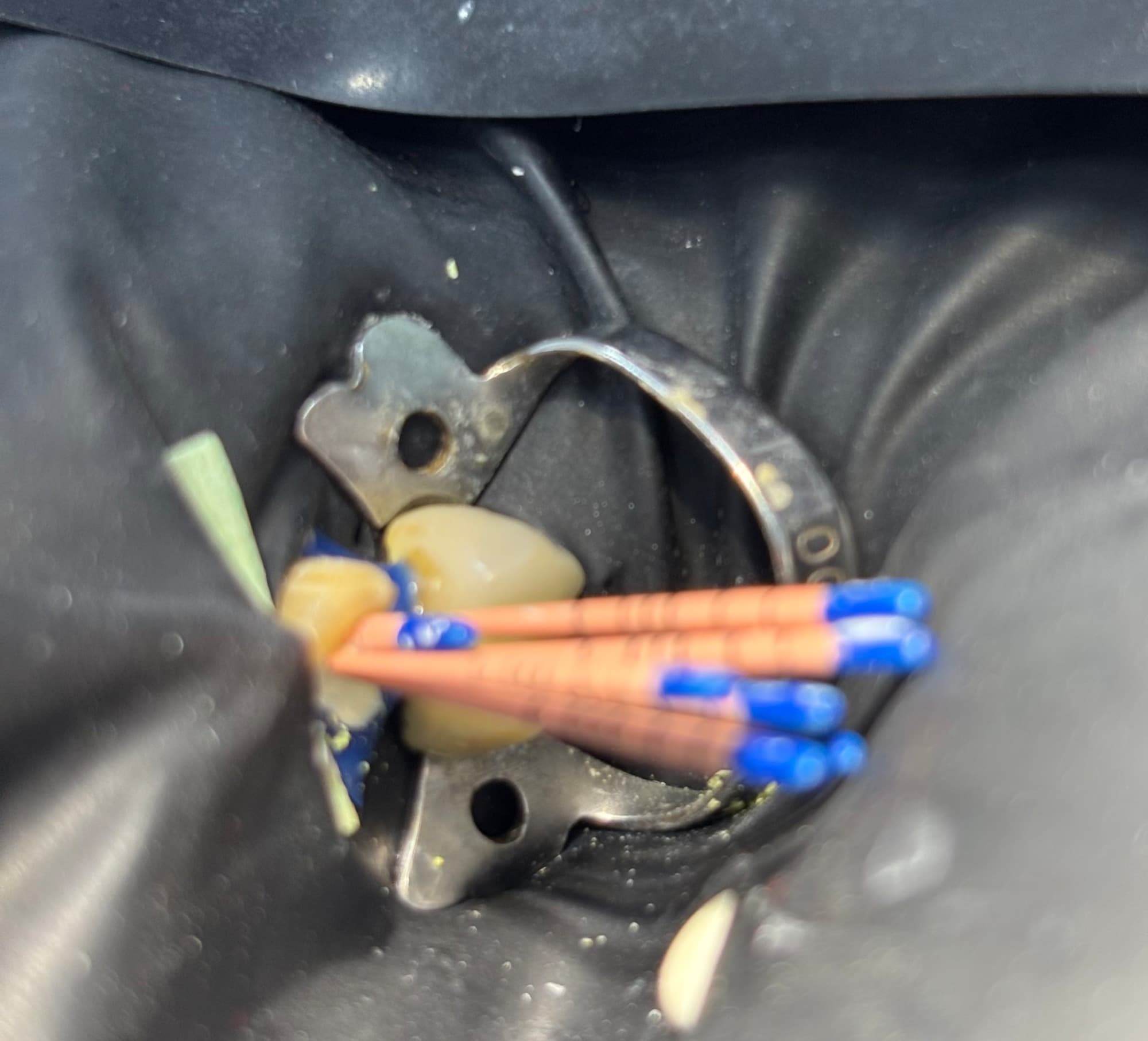
A tooth isolated with a black rubber dam and a metal clamp, with thin marked cones placed in the tooth during canal treatment

A rubber dam is a flexible sheet placed around a tooth — usually with a clamp and frame — so the working area is separated from the rest of the mouth. The clinic photograph with this article shows a tooth isolated with a black rubber dam and a metal clamp, with thin marked cones placed in the tooth during canal treatment.

What is it for?

Saliva and moisture interfere with many filling materials and with cleaning root canals. Isolation reduces saliva reaching the field and keeps the tongue and cheeks away, so the work is clearer and more controlled. That is especially useful in root canal treatment and some dental fillings that need a dry surface.

Not a new invention, and not for every procedure

Rubber dam isolation has been used in dentistry for a long time. It is not a modern marketing device, and it is not used at every visit: examinations, cleaning, and some procedures do not need this isolation. At this clinic many appropriate cases are treated with a rubber dam, while some cases do not require it. The decision follows the procedure and the tooth — not a single rule for every patient.

Frequently asked questions

Is rubber dam a new technique?

No. Rubber dam isolation has been used in dentistry for many decades and remains an established clinical technique.

Is rubber dam necessary for every dental procedure?

No. Its usefulness depends on the procedure and clinical circumstances. It is particularly valuable when effective isolation and moisture control are important.

Why does a dentist use a rubber dam?

To isolate the treatment area, improve moisture control and visibility, and help maintain a cleaner and more controlled operative field.

Frequently asked questions

Ready to book a visit?

Share your name, phone number, and a preferred time. We confirm the appointment on WhatsApp after reviewing the request.
Book an appointment
CallWhatsAppBook appointment